





BDL Tournament Trip Report, Part 2
This is the conclusion of a trip report, the first part of which can be found here, from a high school debate tournament at which I recently volunteered. I founded the Boston Debate League in 2005 to bring competitive extracurricular debate to students at some of the city’s more troubled public high schools and continued to serve as the part-time, volunteer executive director for several years. In 2008 we hired a full-time executive director who has grown the organization into something much larger and more influential. He was out of town this weekend receiving an award from his alma mater for this excellent work and asked me to fill in for him at the tournament, which I was more than glad to to.
Round 3
Saturday morning proves far more hectic than anticipated. There’s a surprising amount of turnover, meaning students who competed last night but who if they plan on coming at all today have not arrived as of 8AM. Frustratingly, I’m not getting good information from coaches about which of their students have not showed up.
I am used to leading by moral authority. When I ran the BDL, the coaches and students all saw how hard I worked, and most of them knew that I wasn’t paid. I more or less shamed them into making my job easier and doing what I told them to do.
Mailbag: 3-Betting Medium Strength Hands
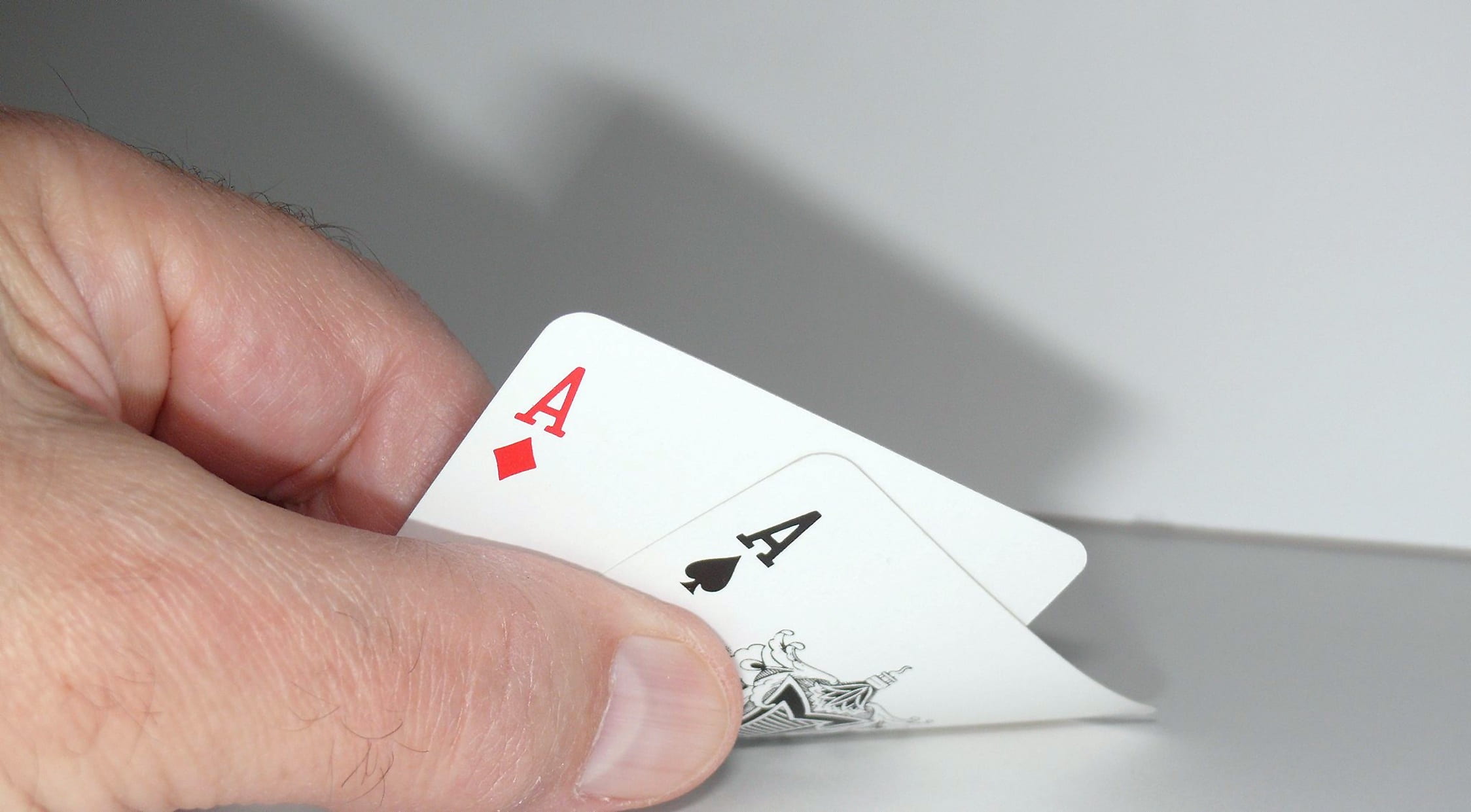
Today’s question comes from a comment on last week’s “What’s Your Play?” The relevant details are that Hero is in the SB with AQs facing a raise from a loose-passive player in early position and a call from a possible scared money player in late position. It’s early in the PCA main event, and everyone is deep-stacked.
Q: I was wondering if you had considered 3b pre? You’re going to have the worst position in the hand going forward. You’ll also have the worst relative position since villain 1 isn’t going to lead the betting to often being passive. I think you get the button to fold a bunch and you get heads up, granted in a bloated pot, but vs a passive player where I’d think you get to show down easier with 1p hands.
A: The short answer is yes, I did consider it. Really, though, if you 3-bet, what are you hoping will happen? You’ll have to fold to a 4-bet, so that’s a bad outcome. Even if you’re called, you won’t be eager to play a big pot if you flop top pair. A passive player’s early position raising range is pretty strong, and it gets stronger once he calls a 3-bet. I think it’s safe to assume neither of these players continues with AJ or KQ, which means that your AQ won’t dominate anything in their calling ranges. If called, you’ll be hoping either to bluff or to flop some value and check it down, maybe squeeze out a value bet. It’s not a disaster, but it’s not a great outcome either.
PCA Trip Report, Part 1
The wait is over! I’m flattered by everyone who’s been asking about this. Part 1 of my PCA Trip Report is now appearing in 2+2 Magazine. Part 2 will be in next month’s magazine. Here’s a snippet from one of the more interesting hands I played:
Saskatchewan limped UTG again, Belgium limped behind, and I raised to 1,000 with A4o in the CO. This raise really blurs the line between “value” and “making a move”, since I do expect to win often with a continuation bet but I also think A4 is ahead of both of their ranges. Essentially I’ve got position and the best hand, so even though it might be tricky to play post-flop, I don’t see how raising can be bad. Saskatchewan joked about how “you internet guys don’t allow limping” and called, and Belgium called as well. They both checked a K83 rainbow, I bet 1,600, Saskatchewan folded, and Belgium quickly raised to 5,100. I was sure he was making a move, so I considered my options.
This trip report focuses almost exclusively on the poker. If you want to read about the rest of the trip, check out Hello, Goodbye, Team Online.
As always, please let me know what you think!
BDL Tournament Trip Report, Day 1
Sorry for the recent silence – I was in Boston over the weekend running a debate tournament for the Boston Debate League. I don’t have a WYP for this week, so instead please enjoy this Trip Report which hopefully will provide a behind-the-scenes insight into the world of high school debate, or our own little corner of it anyway:
There are 174 high school students registered for the debate tournament I am running this weekend. Roughly 135 will actually show up to compete, but not all of those 135 will be among those who registered in advance. These students will compete Friday evening and all day Saturday. Most of them will, anyway – a few show up, without warning, on only one day or the other. Just as many will be competing simultaneously at another of our schools, most of which are not large enough to host so many debates at once. That other school is not my responsibility at all.
About half as many middle schoolers will debate in their own separate competition at my school on Saturday only. They are kind of but not really my responsibility.
When I stepped down, three and a half years ago, as executive director of the Boston Debate League (BDL), we were lucky to get 40 kids at a tournament. Obviously there was no need to spread them out across two sites. There were no middle school debaters.
What’s Your Play? PCA Edition Results
This week’s WYP is a little different, in that I don’t have a strong opinion about what’s best. I was actually hoping some of you smart people could help me out there, in particular with regard to how V2′s question and timing on the turn influences his range. My own, possibly results-oriented thinking was that it might weight him towards weaker draws. With a flush draw or open-ended draw, I think he might call without really thinking about it. If he’s asking, that could weight him towards gutshots or something like an 8 that has a chance of being good (in his eyes – no one’s saying he’s a great hand reader) plus some outs to improve. I also thought Gareth’s suggestion was interesting that V2′s indecision may have been “between calling/raising with a hand like 86s”.
I say I may be results oriented because I bet 3000, V1 sighed and folded, and V2 called with Jh 8h.
Value Betting
As many of you identified, Hero is very likely to have the best hand on the river. The question, however is not only how but whether he can get value from it. Especially in multi-way pots, where people tend to be more tight and passive, it can be difficult to get value from medium-strength hands.
Seminar Announcement: Hand Reading
I’ll be leading a small-group seminar on Hand Reading on Wednesday, February 8th at 2PM Eastern (19:00 GMT). The cost is $150/person, which includes a preparatory curriculum introducing a basic hand-reading technique, the two-hour seminar featuring opportunities to practice this method and receive individualized feedback, advanced strategy advice on counteracting opponents who hand-read well, and a follow-up curriculum to help you practice and expand your skills.
Thinking Poker Tournament Seminars are pre-scheduled, small-group discussions focused on the most common mistakes and skills gaps that I see in my NLHE tournament students. Each two-hour seminar costs $150 per person and is capped at five participants, to enable individualized attention and opportunities for everyone to ask questions and participate in discussions. The content is prepared and the discussion facilitated by me- it’s like an interactive poker video!
Hand reading is what separates mediocre and great post-flop play. It’s what enables you to extract an extra bet when you’re ahead, save a (usually large) bet when you’re beat, and pick off bluffs with weak hands that lesser players would fold without thinking twice. It’s the way great players accumulate chips in the early stages of a tournament when they aren’t getting slapped in the face with the deck.
Hello, Goodbye, Team Online
I’m sad to say that I won’t be staying on as a member of PokerStars Team Online in 2012. It was a great honor and a great experience to be a member of the team, but so much has changed since I joined the team last year. Now that I’m unable to play online from my home country, I’m simply not able to commit to logging the kind of volume befitting a member of Team Online. It’s a shame that I only recently, at the PokerStars Caribbean Adventure, got to meet the other members of the team. They were a fascinating bunch of people, and I loved spending the week with them. My greatest disappointment is that I will no longer be able to call them my teammates. The following is my homage to this extraordinary group of poker players:
I know that there is zero chance of herding fifteen online poker pros into a conference room by 10AM, I tell myself that this is true and that I need not rush, but nevertheless I am there for our PokerStars Team Online meeting at 9:51. I just can’t help being early. This gives me nearly an hour to chat with the other “early” arrivers before we finally begin.
What’s Your Play? PCA Edition
This is really the second WYP from the PCA, but the first was technically a “What’s Your Plan?”, and I couldn’t think of a catchier name for this one. It takes during Level 2 of the tournament, with blinds of 75/150 and effective stacks of well over 20K (I forget how much exactly but it wasn’t relevant for the hand).
Hero: It’s me. Late 20′s, wearing a PokerStars Team Online patch and sunglasses, not saying much but friendly when I do happen my mouth. I’ve been quiet so far and recently showed down KK in a 3-bet pot.
Villain 1: Middle-aged Canadian, recreational player, on the loose-passive side. He limps more than he raises in early position.
Villain 2: Young Spanish kid, maybe 22 at the oldest. This is likely one of the biggest events he’s played, as he’s giving off a bit of a “scared money”-vibe.
Villain 1 opens to 450 in early position, Villain 2 calls in the CO, and Hero calls with As Qs in the SB. The flop came Qd 8c 2h and checks all the way around. Hero bets 900 on a 6c turn, Villain 1 quickly calls, and Villain 2 asks how much, thinks for 15-20 seconds, and calls.