Posts Tagged ‘news’
New Team Online Freerolls on Stars
PokerStars is launching a new freeroll series featuring myself and other members of Team Online.

I know many of you are already PokerStars players, but for those who haven’t signed up yet for an account, or who have friends that are just starting to get interested in online poker, this should be a fun monthly series. PokerStars is guaranteeing a $1000 prize pool and adding a $25 bounty on each of the Team Online Pros. There’s also a $100 freeroll with $10 bounties for those who open a new PokerStars account without depositing.
Here are all the details from PokerStars:
To enter the $1000 Team Online Freeroll, all you have to do is create a PokerStars account and make a real-money deposit on the PokerStars client using the Marketing Code ‘foucault82’.
For players who can’t deposit but still want to play on PokerStars, there’s still a tournament for you to play. This tournament will also be played by Team Online members and if you are fortunate enough to bust one, you will win $10 to help build your bankroll.
To enter the $100 Team Online Freeroll, all you have to do to play is:
- Download the free software.
- Open a new PokerStars.com account.
- After registration, go to “Cashier” and enter the bonus Marketing Code “foucault82″ when depositing.
The Online Poker Players Next Door
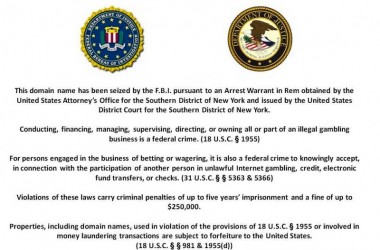
This Op-Ed by Michelle Minton in today’s Washington Times is probably the single most favorable piece to online poker that I’ve seen in any mainstream media outlet ever. After profiling a few very sympathetic professional or semi-professional online players, she concludes,
Limiting online poker or banning it altogether will not stop the problem gamblers, who will continue to find ways to gamble – legally or illegally. But it will hurt the honest professionals who rely on their poker earnings to supplement their incomes. It is time for Congress to reverse the damage done by UIGEA and fully legalize online poker. More important, it is high time that lawmakers respect and protect individuals’ right to spend their time, money and careers as they choose.
Minton also does a nice job of providing an argument for poker-as-skill-game that ought to be clear and compelling to a general audience:
A 2009 study by Cigital, a leading software-security consulting firm, analyzed 103 million cash-game hands from an online card room and found that the best cards won just 12.5 percent of the time. That means the other 87.5 percent of the time, a better card player got players holding better cards to fold. This clearly demonstrates that the “luck of the draw” has little to do with a player’s ability to win.
Is Wicked Chops Poker Headed to the NDT?
As poker’s self-proclaimed master debater (sorry Siola), I feel like I should have been the one to write this excellent article on how the PPA and other poker proponents ought to be selling online poker to the American public:
As with almost everything in politics, public perception does matter and controlling the message matters more. The overall deafening silence from the AGA (and to a lesser degree, Caesars Entertainment, who publicly can’t comment for many reasons, one of which is that they’re helping write the bill), and lack of a cohesive, consistent, and aggressive message from the PPA has created a communications void that is mostly being filled by the opposition. By failing to publicly frame the debate in the mass media as to why online poker should happen, passing the Reid BillTM ends up being that much more difficult, especially after January 1st when the Republicans gain control of the House and seats in the Senate.
With this in mind, we’d shape the argument around the following points (expanded on further after the jump):
- Online poker regulation is about repatriating funds, generating tax revenues, and creating jobs.
- Online poker regulation will stimulate business for all brick & mortars in all states that opt-in.
- Online poker regulation protects kids and adults by creating safeguards for participation.
The Reid Bill
Obviously I’ve been closely following discussions of the “Reid Bill” that would pave the way for licensing of US-based online poker operations following a “blackout period” during which it would be unlawful to offer such games to American players. I have no inside knowledge of the issue myself, but I believe I am well-qualified to sort through the conflicting opinions on this legislation and reach the following tentative conclusions:
Prospects Are Bleak
The online poker language is not in the tax cuts bill that is going to the floor for a vote. Reid is talking about trying to attach it to something else, but this seriously hurts its prospects for passage. Many on 2+2 are relieved by that, but I am not so sure it is good news. The picture of an unregulated future painted by both the Poker Players Alliance (PPA) and others in the know is rather bleak.
The Status Quo is Bad and Getting Worse
This is the major point that the bill’s detractors largely fail to acknowledge. Things are not just fine as they are now. It may seem that way, especially if you are a small stakes player who hasn’t dealt with moving large sums of money, but the sites that still serve US players face major hurdles in doing so.
Senator Reid Seeks to Legalize Internet Poker
A few days ago, Poker Grump asked me what Harry Reid had ever done for internet poker. It wasn’t until I saw this article in the Wall Street Journal that I remembered I hadn’t responded:
Staffers for Senate Majority Leader Harry Reid are circulating a bill to legalize poker playing on the Internet that’s backed by large casino interests.
The Nevada casino companies pushing the measure were among the Democrat’s biggest donors during his fierce re-election fight. They argue the bill would provide consumer protection for poker players and would provide some tax revenue for federal and state governments.
This is a mixed bag, although I believe that in the long run it would be better than nothing, which is what we’re likely to get if there isn’t action in this session. The complication is that
According to the draft of the bill reviewed by The Wall Street Journal, Mr. Reid’s office is considering language that would allow only existing casinos, horse tracks and slot-machine makers to operate online poker websites for the first two years after the bill passes, which could limit the ability of other companies to enter the market.
The bill would also outsource oversight to state regulators, another move supported by existing casinos that don’t want to see the federal government become overly involved in regulating their industry.
After-School Poker
Sunday’s Washington Post ran an article on high school poker clubs, after-school activities where teens learn math skills by playing poker:
Fletcher had been on a tear during the past few meetings of the high school poker club – part of a nascent effort nationwide to take the game from casinos to classrooms, applying card-table concepts to math and logical-reasoning lessons.
As Fletcher’s pile of plastic chips grew last week, he smiled wide. “I don’t know whether math class is helping me with poker, or whether poker is helping me in math class,” he said.
George Mason’s school-sponsored poker club, which was founded in September, has quickly become one of the most popular extracurricular activities at the Falls Church high school. But it also has anti-gambling groups questioning whether it encourages potentially unhealthy habits in children.
Unfortunately, it wasn’t too detailed about how widespread such programs are or how exactly the learning is integrated with playing, which in my opinion would be the critical determinant of success.
Nonetheless, I think this is quite an interesting development. Dating back to ancient Greece and probably before, games have historically been a way of cultivating and rewarding skills that societies wish to see in their young people. Poker’s relationship to gambling has kept it in a separate category and often far away from young people, but I think that recent events demonstrate how badly the US population could use some lessons in financial decision-making.
Ballin’ in the News
While visiting family in Maryland, I came across an article in the Baltimore Sun that I find funny on multiple levels. The article, entitled “New Meters Paying Off”, is about how a switch to centralized parking meters that enable customers to pay with credit cards has generated a big increase in the city’s parking fee revenues.
In the first place, it’s comically sad that this passes for front page news, albeit below the fold.
What really got me laughing, though, was this awesome quote from a Baltimore balla:
John Furst, who was parking at Broadway Market in Fells Point recently, said he quickly realized that he could buy time on a meter on Eastern Avenue- where the city charges 50 cents an hour- and use that receipt a few blocks over in Fells Point where it costs one dollar an hour to park.“If you are in the know in Baltimore, you can do well,” Furst said.
Way to scam the city out of fifty cents an hour, John, you badass!
UB/AP Scandal in the News
The cheating scandal at Ultimate Bet and Absolute Poker made national news yesterday with an article in the Washington Post and a segment on CBS’ 60 Minutes. There was a lot of doom and gloom predictions about what this coverage would look like, but in the end I thought both pieces were reasonably fair and comprehensive, though not without their flaws.
Needless to say, the Post story was better than the 60 Minutes segment. Authored by two-time Pulitzer Prize winner Ira Rosen, it explored the cheating and the means by which it was discovered in considerable detail. Best of all, it kept the focus on UB and AP rather than painting all internet poker sites with the same broad brush. The overall theme of the story was that cheating occurred and that, although the perpetrators were not substantially punished, the players were able to uncover it and force restitution to be paid.
The 60 Minutes story was a bit more sensational, with references to the Wild West and cards “tumbling out of the computer”. It was also a bit more entertaining. After he declined to return their phone calls, they took several pretty funny shots UB cheater and former WSOP world champion Russ Hamilton, who won his “considerable weight in silver” along with the 1994 title.